October 3, 2026
Spring De-Winterizing: Getting Your RV Ready for Camping
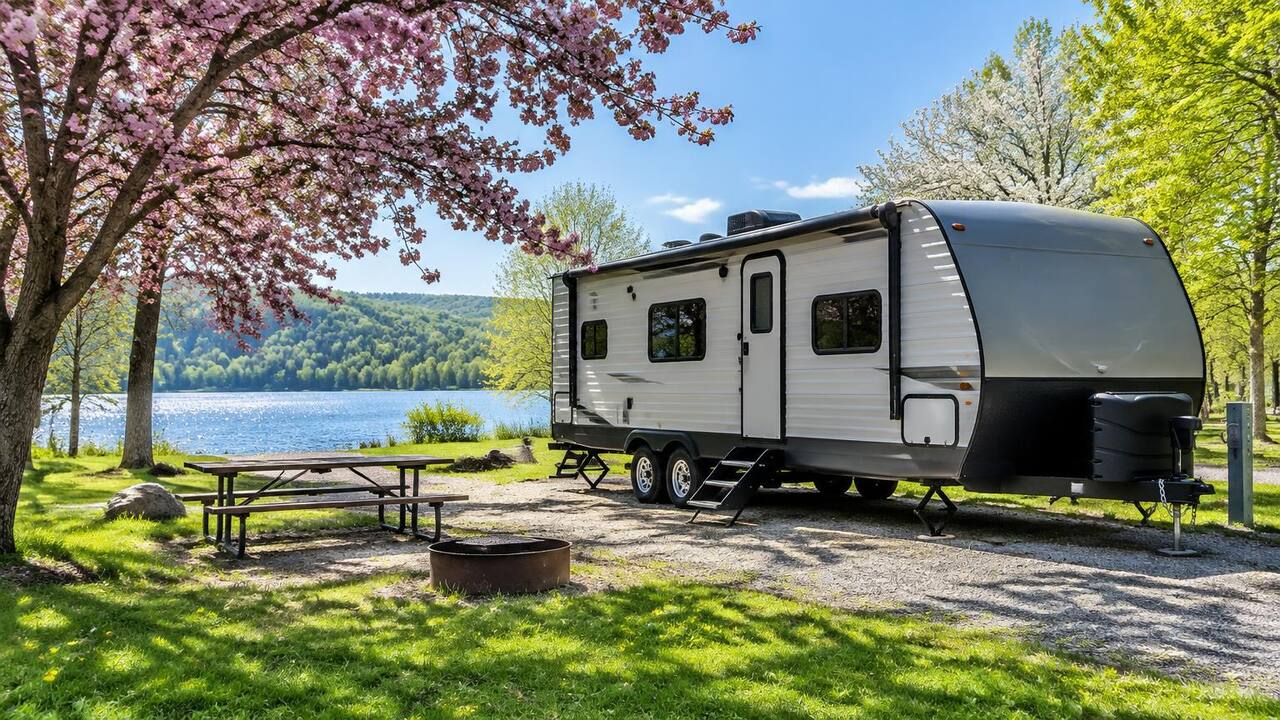
Once the state park campgrounds in Indiana and Illinois start filling up in spring, everyone wants to get out the door fast. Taking a few hours to de-winterize properly at home saves you from finding a leak on your first night at the lake.
Start with a walk-around
Before you connect water, look at the outside of the RV. Check the roof, the seals around vents and windows, and the underside for anything that looks chewed, torn, or wet. Winter weather and rodents both leave clues. Look at the tires for cracking and make sure they are aired to the pressure listed on the sidewall or the RV's placard.
Flush out the antifreeze
Connect city water or fill the fresh tank with clean water. Return the water heater bypass valves to their normal position and make sure the water heater drain plug or anode rod is back in. Then open each faucet, hot side and cold side, until the water runs clear with no pink. Flush the toilet several times. Run the outdoor shower and any other fixtures you have.
Do not turn the water heater on until the tank is full of water. Open a hot faucet and wait until water, not air, comes out steadily. Firing an empty water heater can burn out an electric element in seconds.
Sanitize the fresh water system
Most owners sanitize at the start of each season. A common approach is to mix a measured amount of plain household bleach with water, add it to the fresh tank, fill the tank the rest of the way, then run each faucet until you smell bleach. Let it sit for several hours, then drain and flush with fresh water until the smell is gone. Your RV's owner manual may list a specific ratio, so check it first.
Look for leaks while the system is under pressure
With the pump running or city water connected, open every cabinet that has plumbing. Use a flashlight and a dry paper towel. Check fittings behind the toilet, under the kitchen and bathroom sinks, at the water heater, and around the water pump. A small drip now is a quick fix. A small drip left alone for a season can soften the floor.
Listen to the pump with all faucets closed. If it cycles on every few minutes, something is leaking somewhere, even if you cannot see it yet.
Check for mouse damage
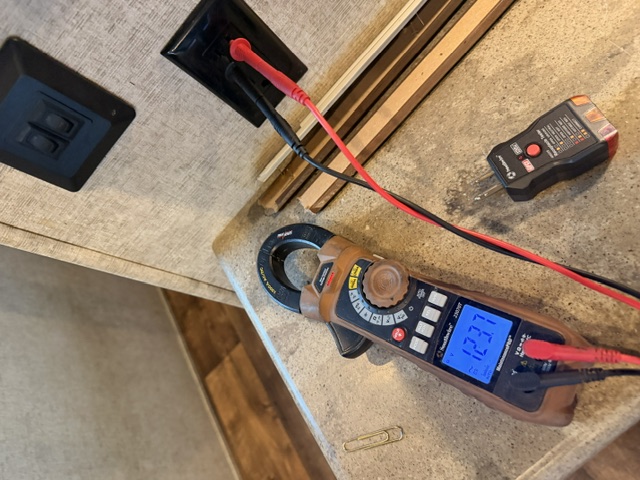
Mice often spend the winter in RVs. Look for droppings in drawers and behind the stove, chewed insulation, and damaged wiring. Chewed wires can cause anything from a dead light to a dangerous short, so do not ignore them. Clean up droppings carefully with gloves and a disinfectant rather than sweeping or vacuuming them dry.
Test every appliance
- Turn on the propane and light the stove burners one at a time
- Run the furnace through a full cycle
- Run the water heater on gas and on electric
- Start the refrigerator on both modes and give it time to cool
- Run the air conditioner and check that it actually cools
- Test the smoke, CO, and propane detectors
- Extend and retract the slides and awning
- Start the generator and run it under load
Testing at home means you find problems where you have tools, time, and a phone signal, instead of at a campsite on a Friday night.
When to call a pro
If you find leaks you cannot reach, a pump that keeps cycling, chewed wires, or an appliance that will not work, it is time to call. Plumbing hidden behind panels and under floors is often easier to diagnose with experience and the right tools.
If you would rather have it done right without the guesswork, call or text Mat at (855) 949-6107. He comes to your home, campground, or storage lot.