October 7, 2026
Keeping Your RV Batteries Alive Through a Midwest Winter
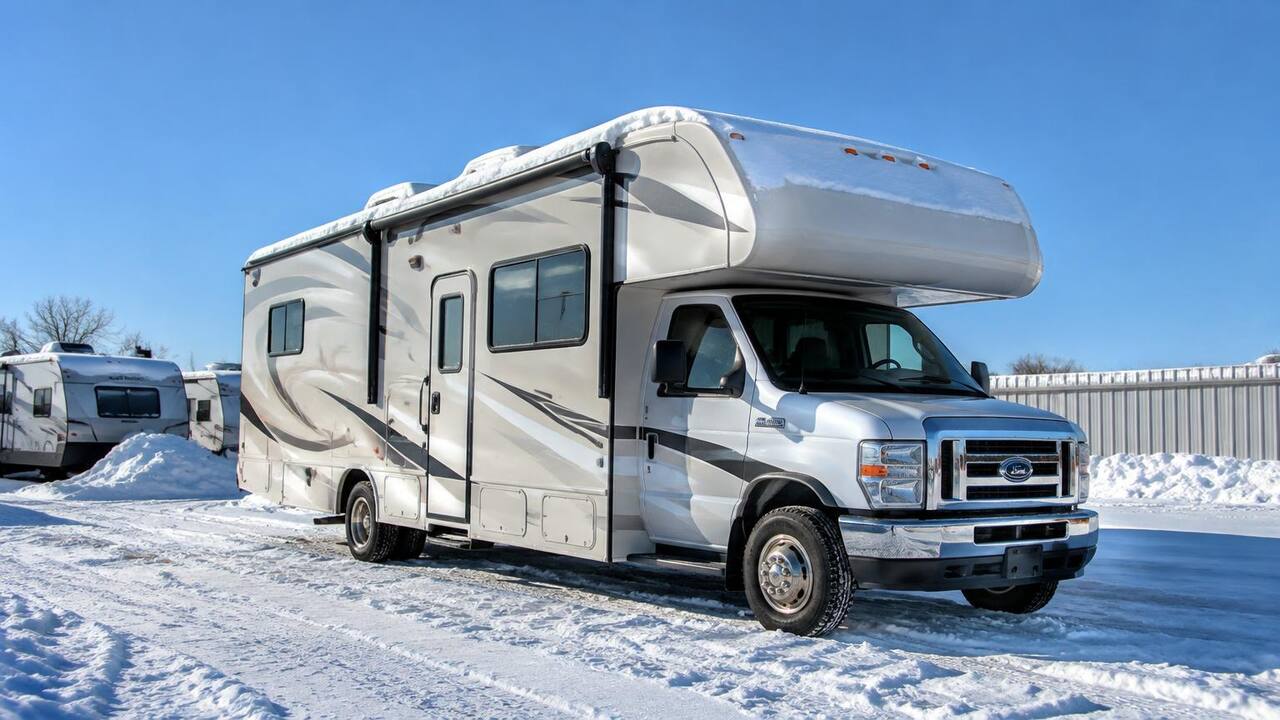
Many RVs in West Central Indiana and East Central Illinois spend four or five months parked in a driveway, barn, or storage lot. Batteries are often the first thing to suffer. A battery that sits discharged through cold weather can lose capacity for good, and a fully drained battery can even freeze.
Know what is drawing power
Even with everything turned off, most RVs have small loads that never stop. Propane and CO detectors, radio memory, control boards, and some step and slide controllers all pull a little power. Over weeks, that small draw can flatten a battery bank.
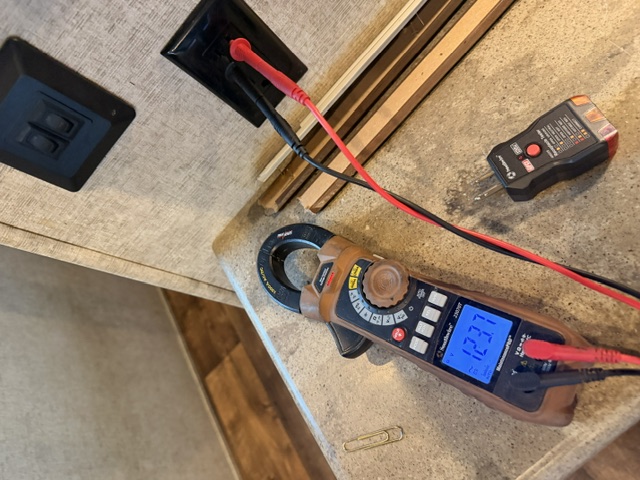
If you have a meter, you can check for a draw by measuring current at the battery with everything off. You do not need to find every small load yourself. The goal is simply to know that the batteries will drain if nothing is done.
Use the battery disconnect, and confirm it works
Most RVs have a battery disconnect switch. Turning it off should cut those small loads. Some disconnects do not cut everything, depending on how the RV was wired. After switching it off, check that the interior lights and detectors are actually dead. If they still have power, something is wired around the switch.
Maintainer or removal
There are two good approaches for winter:
- Leave the batteries in place, switch off the disconnect, and connect a smart maintainer designed for your battery type
- Remove the batteries, charge them fully, and store them somewhere above freezing, then top them off once or twice during the winter
Leaving an RV plugged into shore power all winter can work, but some older converters charge at a constant voltage that slowly boils water out of flooded batteries. A modern multi-stage charger or a dedicated maintainer is gentler.
Cold and charging
Cold batteries accept charge more slowly. Lithium batteries in particular should not be charged below freezing unless they have a built-in heater or a battery management system that prevents it. Check your lithium battery's documentation before relying on a maintainer through a cold snap.
Lead-acid batteries are more forgiving about charging in the cold, but they are much more likely to freeze if they are discharged. Keeping them full is the key.
Check water levels on flooded batteries
If your batteries have removable caps, they are flooded lead-acid batteries and need water. Before storage, and again in spring, check that the plates are covered. Top up with distilled water only, and only after charging, since levels rise during charging. Wear eye protection and gloves; battery acid is no joke.
Clean terminals
White or green buildup on terminals adds resistance and can make a good battery look bad. Disconnect the negative cable first, clean the terminals with a baking soda and water mix and a brush, rinse, dry, and reconnect positive first, then negative.
Spring wake-up
When the season starts, charge fully before your first trip and run a few things to see if the batteries hold up. If they drop quickly or will not reach full voltage, they may have lost capacity over the winter.
When to call a pro
If your batteries die even with the disconnect off, if your charger does not seem to bring them back to full, or if you are thinking about switching battery types, a technician can test the batteries under load and check the converter and charging system.
If you would rather have it done right without the guesswork, call or text Mat at (855) 949-6107. He comes to your home, campground, or storage lot.